7 Kitchen Habits That Keep Your Counters Clutter-Free
Clear counters rarely come from one big purge. They come from a few small decisions, repeated until you stop noticing them.
Disclosure: Some product links on this site may earn us a commission. Read our affiliate disclosure.
Kitchen counters collect things because they’re flat, central, and at exactly the height where your hands happen to be when you walk in the door. A weekend of organizing helps, but the clutter tends to come back unless something about the daily routine changes.
These seven habits work in ordinary kitchens with ordinary amounts of cabinet space. Pick two to start with. Once they’re automatic, add another.
1. Earn the counter
Give every item on the counter a simple test: do you use it most days? A coffee maker usually passes. A stand mixer you pull out at Thanksgiving doesn’t, however handsome it looks.
The daily-use test
- Used at least four days a week: can stay out
- Used weekly: nearest cabinet or low shelf
- Used monthly: higher shelf or pantry
- Used a few times a year: top shelf, garage, or closet
- Not used in the past year: consider donating it
2. Set up a landing spot away from the food zone
Mail, keys, school papers, and sunglasses arrive together, and they need somewhere to go. Choose one spot, ideally near the door rather than beside the stove. A shallow tray or a single wall hook is enough. The container matters less than the rule: if it isn’t in the landing spot, it doesn’t belong in the kitchen.
3. Deal with paper the day it arrives
Paper is what turns a tidy counter into a pile. Stand next to the trash or recycling and sort the mail as you bring it in. Keep what needs action in one folder and recycle the rest. If you have children, a single basket for school forms keeps them from spreading across the room.
4. Group what stays out
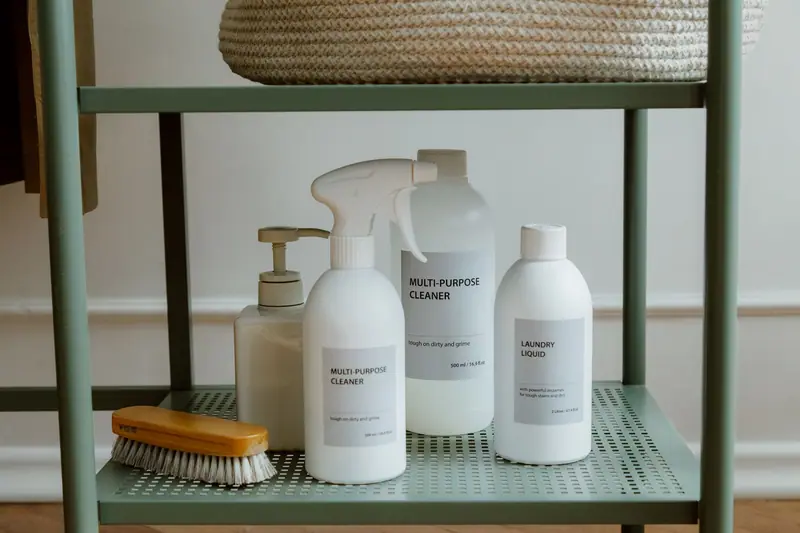
Five loose objects look like clutter, while the same five on a small tray look deliberate. Corral oil, salt, and pepper near the stove. Keep dish soap and a brush together at the sink. A tray also makes wiping down faster, because you lift one thing instead of five.
5. Unload the dishwasher before you need it
Dishes pile up beside the sink when the dishwasher is still full of clean ones. Unloading first thing in the morning, or while coffee brews, keeps the path open all day. Then dirty dishes go straight in. If you hand-wash, a small rack that gets emptied once a day does the same job.
6. Run a two-minute nightly reset
This is the habit that makes the others stick. Before bed, set a timer if it helps:
- Return strays. Anything that isn’t a daily-use item goes back where it lives.
- Move the paper. Anything left on the counter goes to the landing spot.
- Wipe. One pass with a damp cloth across the clear surface.
- Set up the morning. Fill the kettle, or put the mug by the coffee maker.
A clear counter in the morning tends to set the tone, and it’s far easier to keep clear than to rescue later.
7. Apply one in, one out
When a new gadget, mug, or water bottle comes home, something similar leaves. It’s the simplest way to protect the space you’ve cleared, and it makes you think twice about that single-purpose avocado tool.
When the problem is storage, not habits
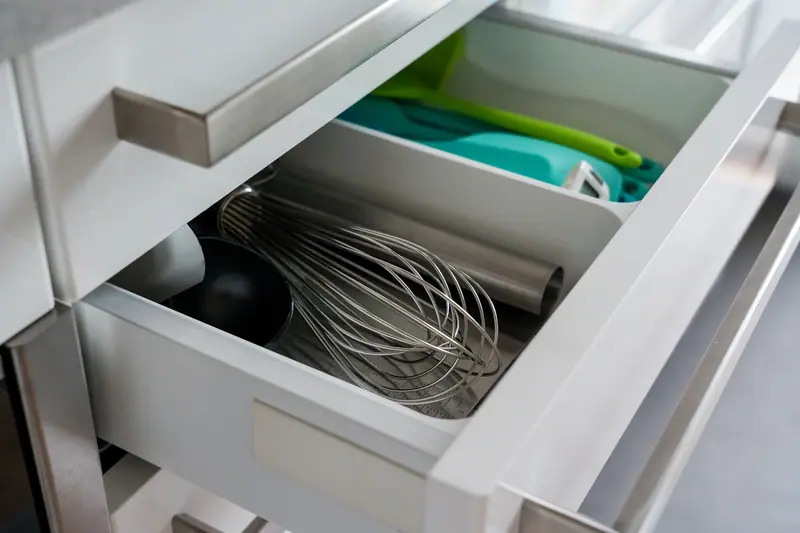
If your cabinets really are full, habits only go so far. Look up: the top shelf of most cabinets is underused. Look inside: a door-mounted rack, if your cabinets allow one, can hold lids or wraps. And look at duplicates. Most kitchens have a few extra spatulas, and clearing them makes room for something that deserves to be put away. Our guide to decluttering kitchen drawers walks through that process.
Frequently asked questions
What should stay on kitchen counters?
Whatever you truly use most days. For many households, that’s a coffee maker, a knife block or magnetic strip, and a small tray of cooking basics. There’s no universal list.
How do I keep clutter down if my kitchen is tiny?
Use wall space where you’re allowed to, keep only daily items out, and store appliances you use less often somewhere else in the home.
What if other people in the house don’t follow the system?
Keep it simple enough that it doesn’t need explaining. One landing spot, clearly placed, works better than a labeled system nobody remembers.
This guide is general information. Your home, appliances, and products may differ, so follow manufacturer instructions and product labels. Spot an error? Tell us, or read our Editorial Policy.