How to Deep Clean Your Washing Machine in 30 Minutes
The gasket, the drawer, the filter, and the tub: a hands-on routine for front- and top-loading machines that fits into half an hour.
Disclosure: Some product links on this site may earn us a commission. Read our affiliate disclosure.
A washing machine spends its whole life full of soap and water, so it’s easy to assume it cleans itself. It doesn’t. Detergent residue, lint, and body soil collect in the places water doesn’t reach well, and the warm, damp interior gives odors a head start.
The good news is that the job is simple. Expect about 30 minutes of hands-on work. The cleaning cycle itself then runs unattended, and depending on your machine that can add an hour or more.
Before you start: check your manual
Manufacturers don’t all agree on what belongs in a cleaning cycle. Some recommend a specific washer-cleaning product, some call for chlorine bleach, and some warn against vinegar because repeated use may be hard on rubber seals and hoses. Your manual, or the support page for your model, overrides any general advice, including ours.
What you’ll need
- Your washer’s manual or model number
- Washing machine cleaner, or chlorine bleach if your manual allows it
- Microfiber cloths and an old toothbrush
- Rubber gloves
- A shallow pan and an old towel (for the drain filter)
- Warm water and a small amount of dish soap
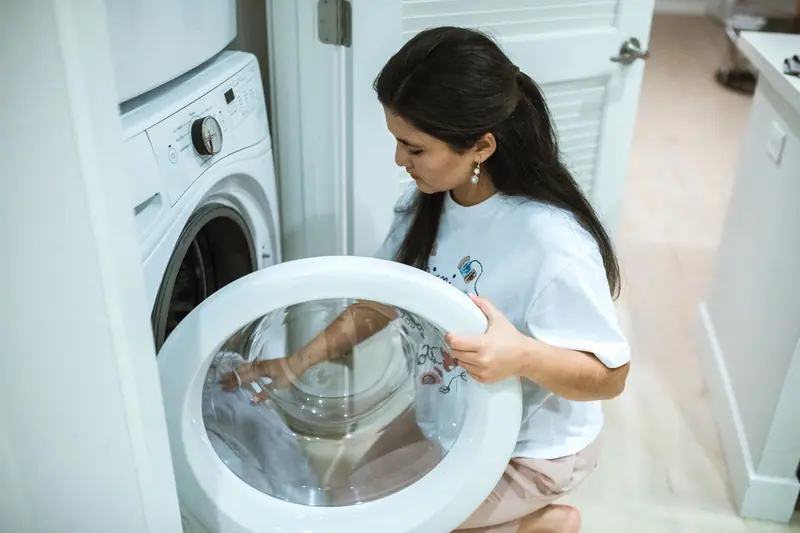
How to clean a front-loading washer
Front-loaders use less water and seal tightly, which is exactly why they’re more prone to musty smells.
Clean the door gasket
- Pull back the rubber folds. Look along the bottom of the gasket, where water and lint settle. Check for hair, coins, and small socks.
- Wipe every fold. Use a cloth dampened with warm, soapy water, or the cleaner your manual recommends. A toothbrush reaches the deepest creases.
- Treat mildew spots. If your manufacturer permits it, use a diluted bleach solution mixed according to the bleach label, wearing gloves. Let it sit briefly, then wipe with a clean, damp cloth.
- Dry the gasket. Finish with a dry towel, including the inside lip.
Clean the detergent drawer
- Remove the drawer. Most slide out after you press a release tab, often marked in the softener compartment.
- Soak it. Set it in warm, soapy water for ten minutes while you move on to the filter.
- Scrub the housing. Use the toothbrush on the cavity the drawer slides into, especially the ceiling, where mold often hides out of sight.
- Rinse and replace. Let the drawer dry, or towel it off, before sliding it back in.
Empty the drain pump filter
Not every washer has a user-accessible filter, but many front-loaders do, usually behind a small panel at the bottom front.
- Make sure the water is cool. If you’ve just run a hot cycle, wait. Unplug the machine.
- Prepare for water. Lay down the towel and slide the shallow pan beneath the filter. Some models include a small drain hose to empty first.
- Unscrew the filter slowly. Let the water drain out in stages.
- Remove debris and rinse. Clear lint and objects, rinse the filter under the tap, and screw it back in firmly so it doesn’t leak.
Run the cleaning cycle
Empty the drum and select Tub Clean or Self Clean if your machine has it. If it doesn’t, use the hottest, longest cycle your manual suggests for cleaning. Add only the product your manufacturer recommends, in the amount it recommends. Don’t add laundry.
How to clean a top-loading washer
Top-loaders have fewer seals, but they hide grime under the rim and around the agitator.
- Wipe the top edge. Lift the lid and clean under the rim of the tub, the lid’s underside, and the hinge area.
- Remove what comes out. On some models, fabric softener cups or agitator caps lift off. Soak them in warm, soapy water and scrub. Don’t force a part that isn’t designed to detach.
- Check for a lint trap. Some older top-loaders have one along the rim or inside the agitator. Your manual will show you where.
- Run the cycle. Use the machine’s cleaning setting, or the hottest and largest load your manual suggests, with the recommended product.
- Finish with a wipe. Once the cycle ends, wipe out any loosened residue around the rim.
Keep it clean between deep cleans
- Leave the door and drawer slightly open after each load so the interior can dry, as long as children and pets can’t get inside.
- Remove wet laundry promptly. A damp load left overnight is a common source of sour smells.
- Measure detergent. Too much leaves residue. High-efficiency machines need HE detergent, used in the amount on the label.
- Wipe the gasket weekly on front-loaders. It takes less than a minute.
Many manufacturers suggest a cleaning cycle about once a month. Households that wash often, or use mostly cool water, may want to stay close to that schedule.
Frequently asked questions
Can I use vinegar to clean my washing machine?
It depends on the machine. Some sources suggest it, while some manufacturers advise against regular use because it may affect rubber parts. Check your manual first, and never combine vinegar with bleach.
How often should I deep clean my washer?
About once a month is a common manufacturer recommendation. Your manual may list a different interval, and some machines display a reminder.
Why does my clean washer still smell?
Check the drain filter, the gasket folds, and the drawer housing. If the smell continues after a full cleaning, a drain or venting issue may be involved, and it’s reasonable to call a technician.
Is it safe to leave the door open?
Leaving it ajar helps the drum dry, but keep the laundry room closed or the door latched if young children or pets could climb inside.
This guide is general information. Your home, appliances, and products may differ, so follow manufacturer instructions and product labels. Spot an error? Tell us, or read our Editorial Policy.