How to Organize a Small Closet Without Buying Anything
You don’t need matching bins. A small closet gets much easier once you decide what belongs there and put the things you wear within easy reach.
Disclosure: Some product links on this site may earn us a commission. Read our affiliate disclosure.
Organizing content has a way of ending with a shopping list. But the most useful changes in a small closet cost nothing. They come from owning fewer things in that space, and from putting what you wear in the spots that are easiest to reach.
Set aside an hour or two. The size of your wardrobe will decide which end of that range you land on.
What you’ll need (all from around the house)
- Three bags or boxes labeled Keep Elsewhere, Donate, and Toss
- Shoe boxes, gift boxes, or shipping boxes
- A tape measure, if you have one
- A damp cloth for shelves and rods
Step 1: Take everything out
It feels dramatic, but it’s the only way to see the space. Clear the rod, the shelves, and the floor. Wipe everything down while it’s empty, and notice any wasted space: the gap above the top shelf, the empty zone beneath short hanging clothes, the inside of the door.
Step 2: Edit with clear questions
Pick up each item and ask:
- Have I worn this in the past year?
- Does it fit me right now?
- Would I wear it this week if it were clean?
- Do I own a better version of it?
Anything that gets a clear “no” goes in Donate or Toss. Things you need but rarely wear, like formal clothes, ski gear, or the off-season coat, go in Keep Elsewhere.
Step 3: Move the off-season out
Off-season clothes are often the biggest single space-saver. Store them in a suitcase you already own, a clean box under the bed, or a high shelf in another room. Wash clothes first, because stains and body oils can attract moths and other pests during storage.
Step 4: Build zones around how you get dressed
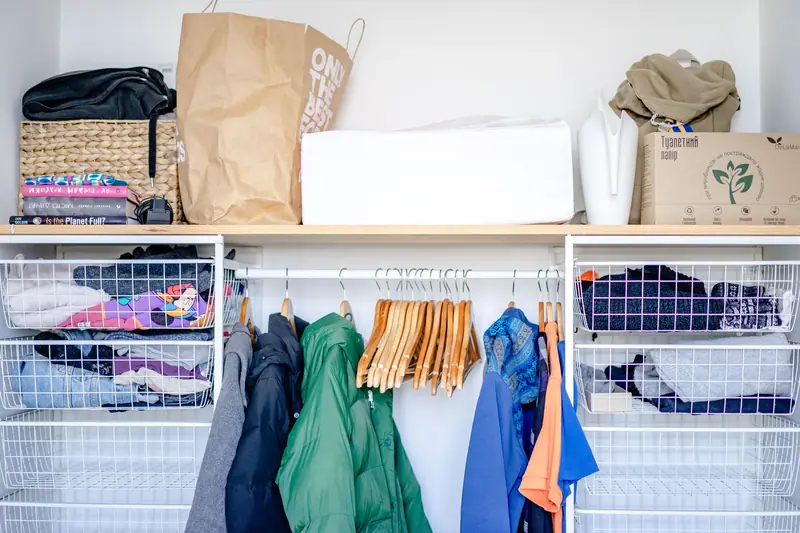
Put your most-worn clothes between shoulder and hip height, directly in front of where you stand. Then work outward.
| Zone | Best for |
|---|---|
| Center of the rod | Everyday tops, work clothes |
| Ends of the rod | Dressy or occasional items |
| Eye-level shelf | Folded everyday basics |
| Top shelf | Bags, seasonal accessories, spare bedding |
| Floor | Shoes, a laundry basket, heavier items |
Within each zone, hang by type and then by length. Grouping long items together exposes a clear area under the short ones, which is perfect for a stack of boxes or shoes.
Step 5: Make free storage from what you have
- Shoe boxes as drawer dividers or shelf bins. Remove the lids and stand them on a shelf to corral socks, belts, or scarves. Cut the front down on one side so you can see in.
- Cereal boxes as file holders. Cut at an angle and stand folded jeans or bags inside.
- Suitcases as storage. An empty suitcase is wasted space, so keep off-season clothes in it.
- Spare hooks and over-door hangers. If you already own them, use the door for bags or tomorrow’s outfit. Check that the door still closes properly.
- Ribbon or string. Tie a small label to a shelf box so you know what’s in it.
Check the weight of anything on a high shelf. Keep heavy items low so they can’t fall when you pull something down.
Step 6: Fold to stand, not to stack
File-folding keeps every item visible. Fold T-shirts into a small rectangle and stand them upright in a shoe box or drawer, and you won’t have to dig through a pile to reach the one on the bottom. Bulky sweaters are usually better folded than hung, since hanging can stretch the shoulders.
Step 7: Put it back and set a limit
Return only what passed the edit, keeping some room between hangers. If clothes are packed tight, they wrinkle and you’ll stop putting them away. A simple limit helps: when the rod is full, something has to leave before something new comes in.
Frequently asked questions
How much space should I leave on the closet rod?
Enough that you can slide hangers without pulling hard. If you can flip through clothes with one hand, you’re in good shape.
Where should I store clothes if I have no extra closet?
Try under the bed, a suitcase, or the top of the closet. Keep clothes clean and dry, and avoid damp basements if you can.
How often should I reorganize?
A quick edit at each change of season is usually enough. Moving clothes between seasons gives you a natural moment to reassess.
This guide is general information. Your home, appliances, and products may differ, so follow manufacturer instructions and product labels. Spot an error? Tell us, or read our Editorial Policy.