How to Clean Your Fridge and Keep It Fresh Longer
A top-to-bottom fridge clean, with the food-safety details that matter: how long food can stay out, where raw meat goes, and what temperature to set.
Disclosure: Some product links on this site may earn us a commission. Read our affiliate disclosure.
A refrigerator clean works best when you treat it as a food-safety job as well as a tidying one. That means working quickly, keeping perishables cold, and checking the temperature while you’re in there.
Set aside 30 to 45 minutes. It will go faster if you do it just before a grocery run, when the shelves are close to empty.
Know the numbers
Refrigerators should be at 40°F (4°C) or below, and freezers at 0°F (-18°C), according to the FDA. The built-in dial doesn’t always tell you the actual temperature, so an inexpensive appliance thermometer is a worthwhile check.
What you’ll need
- A cooler with ice or gel packs
- Baking soda and warm water
- Clean cloths or sponges
- Mild dish soap
- A soft brush or old toothbrush
- An appliance thermometer
- A trash bag
Step by step
- Unload and sort. Move perishable foods to the cooler. Throw away anything that’s expired, spoiled, or impossible to identify.
- Remove shelves and drawers. Take out whatever comes out easily. Let cold glass shelves warm up to room temperature before washing them in hot water, because sudden temperature changes can crack glass.
- Wash removable parts. Use warm water and mild dish soap in the sink. Rinse and dry them well.
- Clean the interior. Mix about 1 tablespoon of baking soda per quart of warm water and wipe down the walls, ceiling, and floor. Start at the top and work down so drips land on areas you haven’t cleaned yet.
- Get into the details. A toothbrush helps with shelf supports, the door seal, and drawer tracks. Don’t use a sharp tool to scrape, and avoid abrasive pads and strong solvents, which can damage surfaces and may leave a residue or odor.
- Wipe the door gasket. Crumbs in the seal stop it from closing properly. Wipe it clean and dry.
- Dry and reassemble. Replace the shelves and drawers.
- Check containers before returning them. Wipe down sticky jars and bottles, then put everything back according to the zones below.
Where everything should go
| Location | Best for |
|---|---|
| Upper shelves | Leftovers, drinks, ready-to-eat foods |
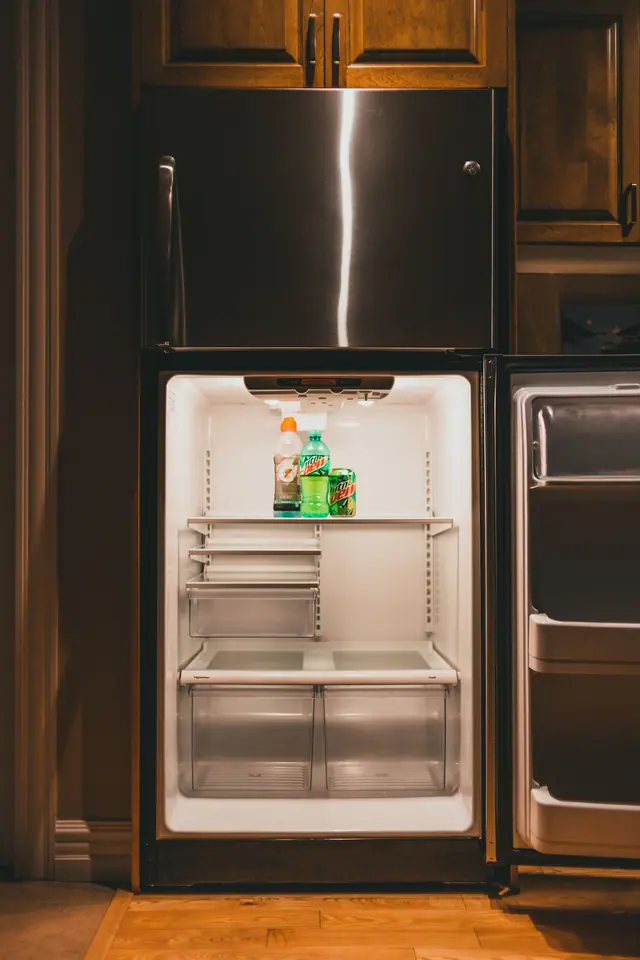
| Lower shelves | Raw meat, poultry, and seafood on a tray, kept away from other foods |
| Crisper drawers | Produce; follow your model’s humidity settings |
| Door | Condiments and other items that handle temperature swings well |
Store milk and eggs on a shelf instead of the door, which is usually the warmest part of the fridge. Keeping raw meat at the bottom, on a tray or in a sealed container, prevents juices from dripping onto other food.
Habits to keep it fresh longer
- Use leftovers within 3 to 4 days, a common USDA guideline. Label containers with a date.
- Don’t overpack. Cold air needs to circulate to do its job.
- Refrigerate food promptly, and divide large batches into shallow containers so they cool quickly.
- Clean up spills when they happen, which is much easier than scrubbing them once they’ve dried.
- Do a weekly check before trash day, and wipe the shelf or drawer that needs it most.
Don’t forget the outside
Wipe handles, which get touched constantly, and clean the exterior according to the finish. Stainless steel usually does best with a soft cloth used in the direction of the grain. If your model has accessible condenser coils, unplug it and vacuum dust according to the manufacturer’s instructions. Doing this can help the fridge run the way it was designed to.
Frequently asked questions
How often should I clean my fridge?
Do a quick check weekly, and a deeper clean every few months. Spills should be wiped up right away.
Can I use bleach inside the fridge?
You usually don’t need it. Baking soda and water or mild dish soap are the usual options. If you’re dealing with contamination, such as raw meat juices, follow current FDA or USDA guidance for sanitizing, rinse with clean water, and let it dry.
What’s the best setting for a fridge?
Whichever one holds the interior at 40°F or below according to a thermometer. Dial numbers mean different things on different models.
Do I need to unplug the fridge?
For a routine clean, no, though working quickly helps it stay cold. Unplug it for jobs around electrical parts or the coils, and for any task where your manual says to.
This guide is general information. Your home, appliances, and products may differ, so follow manufacturer instructions and product labels. Spot an error? Tell us, or read our Editorial Policy.